.svg)

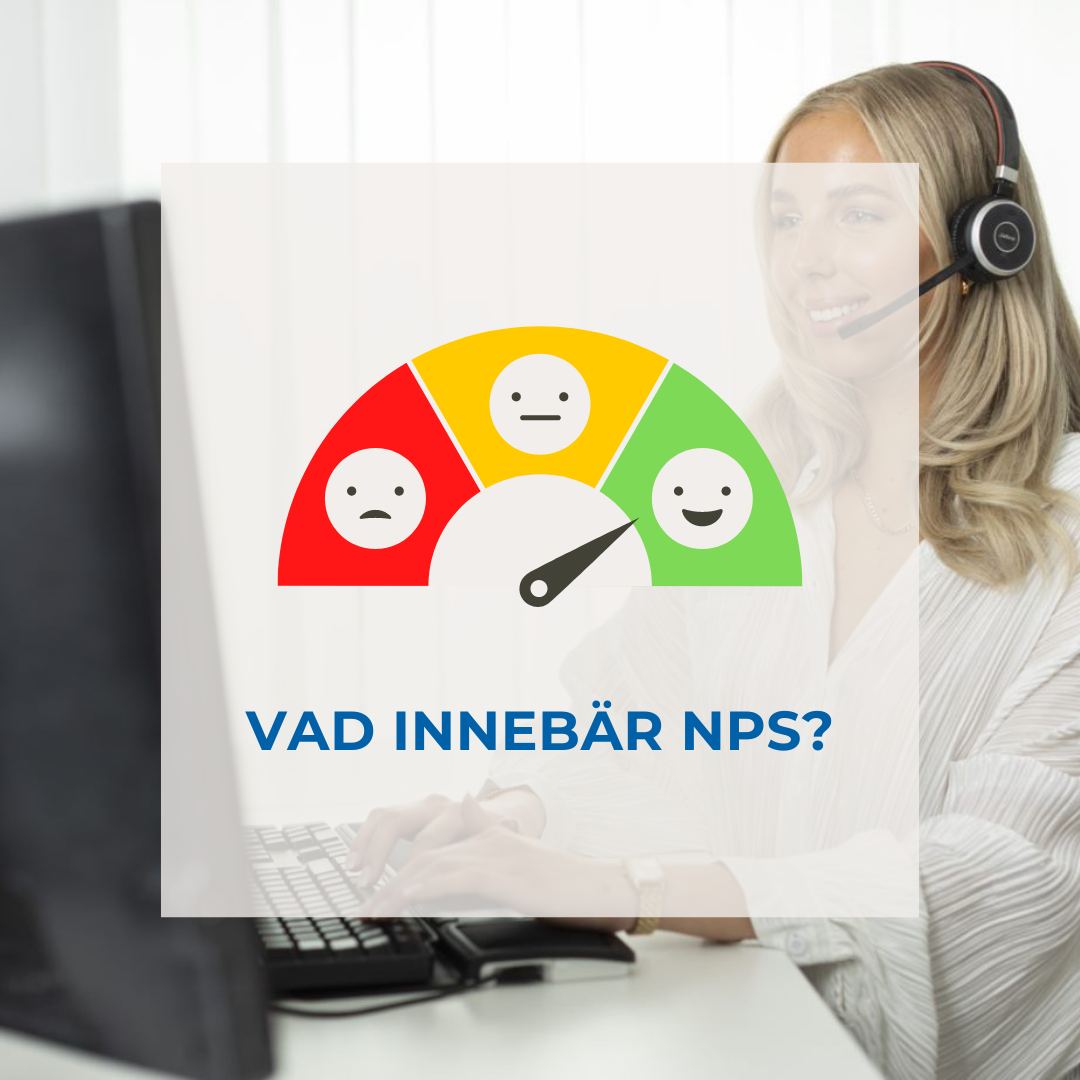
What does NPS mean?
NPS stands for Net Promoter Score and is an index for measuring customer loyalty. NPS measures customers’ satisfaction, more directly customers’ degree of loyalty and recommendation of the company.
What does NPS measure?
NPS differs from other benchmarks, such as customer satisfaction measures (CSAT) or measures of customer engagement – customer effort score (CES) – in that it measures the customer’s overall feeling for a brand, rather than their perception of a single interaction or a single purchase.
How does NPS work?
A step-by-step guide to your NPS work
1. Ask your customers the question: How likely is it that you would recommend (the company) to a friend or colleague?
The survey is simple to carry out because it is based solely on the question: How likely is it that you would recommend (the company) to a friend or colleague?
Respondents then answer the question by giving a value on a scale, with a range between 0–10. When the result is extracted, respondents are categorised according to their score depending on what they indicated on the scale:
The NPS promoters category consists of enthusiastic, loyal customers who tell their friends about your company and can potentially bring in new customers.
The NPS passives category consists of customers who are passive and indifferent, who may become promoters – or they may switch to your competitor.
The NPS detractors category consists of dissatisfied customers. You risk not only losing them; they can also damage your brand by sharing their bad experiences with other people.
The formula for extracting the index value is calculated by taking the percentage of promoters, that is respondents who answered 9–10, minus the percentage of detractors, that is everyone who answered 0–6. NPS can therefore give a range between –100 and 100. The closer you come to the value 100, the more promoters you have and the better your score.
If you have more promoters than detractors as the company’s NPS, the value becomes positive, that is a value between 1–100 is generated. If instead you have more detractors, the final figure can become negative, that is you get a value between –1 and –100.
NPS
Now we know how NPS works, but let us take a look at why NPS is so important for your company’s success and development.
It is important to identify negative (detractor) customers in order to avoid losing them; measuring customer loyalty therefore gives a valuable measure that helps companies retain existing customers and gain new customers.
By identifying changes in the NPS result, your company is given an idea of how likely it is that the average customer will recommend you to a friend. But changes in the distribution of scores – between promoters, passives and detractors – also give the company an indication of the direction in which the overall NPS development is heading.
We always recommend creating opportunities for customers to leave comments. An NPS survey with accompanying free-text questions gives customers the opportunity to leave specific comments about why they gave the score they gave. In this way you can evaluate qualitative feedback from customers who get the chance to point out specific things you can change in order to improve their experience of your product or service.
NPS gives an indication of how likely customers are to recommend your company. Do not let the work stop there! Make use of your satisfied customers through reference marketing. Ask for customer cases, references and reviews online to attract potential new customers.
It is important to follow up satisfied customers, but it is also important to follow up dissatisfied customers.
Analyse the reasons why respondents chose their answers. Have the detractors stated anything in particular about why they are not satisfied? Is there a problem or a question they have when they use your product or service? By following up the detractors they feel seen and heard!
Would your organisation like to know more about how you can measure customer satisfaction with NPS? Book a demo with us today and we will tell you more!
Tags: